$4,000 for a dining table? I can get one for $800 online.
I hear this often. It is a fair question. To the untrained eye, a table is a table at first glance. It has four legs and a flat top. Why should one cost five times as much as the other?
The difference lies in how it is made, who makes it, and how long it will last. This is not about snobbery; it is about pure economics and material science. Let’s break down the hidden costs of custom woodworking.
1. Material Yield (The "No Knot" Rule)
Mass-produced furniture often uses "character grade" lumber or, more likely, veneers over particle board. When they use solid wood, they use machines to cut around defects, gluing up hundreds of tiny strips to make a panel (this is why cheap butcher block tops look like mosaics).
At Carpceter, we buy FAS (First and Seconds) grade lumber—the highest grade available. Even then, we reject about 30% of boards for color mismatch or grain runout. To make a beautiful 8-foot table top where the grain flows seamlessly from one end to the other, we might sort through 500 board feet of lumber. You are paying for that selection process.
2. Labor Hours
In a factory, a CNC machine cuts 50 table legs in an hour. They are sanded by a massive drum sander in 2 minutes.
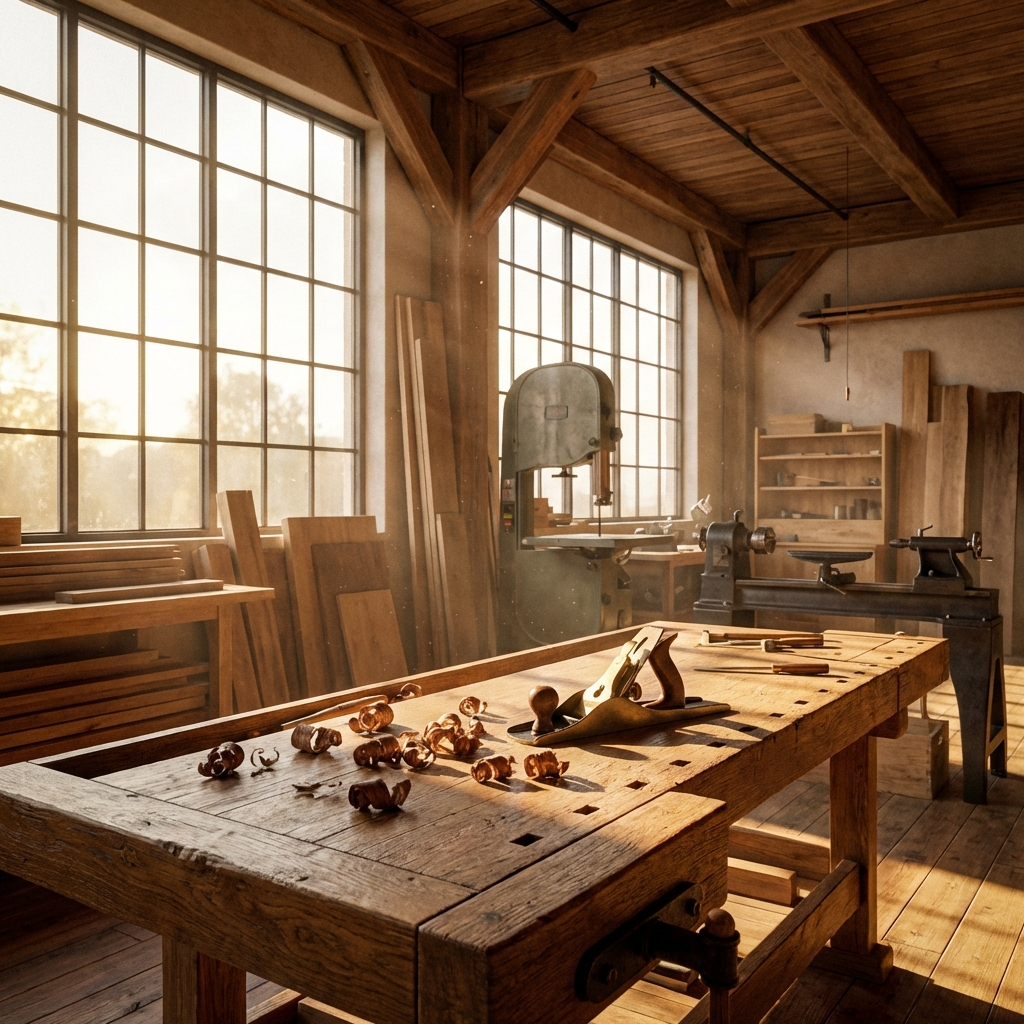
In our atelier, I shape a leg by hand using a spokeshave to get the perfect taper. I cut the joinery—the mortise and tenon—to a tolerance of 0.005 inches. If it is too loose, the joint will fail in 20 years. If it is too tight, it will split. This fit must be perfect.
A typical custom dining table represents about 40 to 60 hours of skilled labor. You are paying for the time of a Master Craftsman, not a machine operator.
3. Joinery vs. Hardware
Cheap furniture is held together with screws and bolts. Over time, as wood expands and contracts with the seasons, these metal fasteners crush the wood fibers. The screws loosen. The table wobbles. You tighten it. It loosens again. Eventually, the hole strips out, and the table is trash.
We use traditional wood-on-wood joinery. A draw-bored mortise and tenon joint actually gets tighter over time. The wood moves together. There is no metal to fatigue. We are building for a 100-year timeline, not a 5-year warranties.
4. The Finish
Factory furniture is sprayed with quick-drying catalyzed lacquer. It is done in seconds.
We apply oil finishes by hand. We rub it in. We wait. We buff it. We wait 24 hours. We sand it again. We apply a second coat. We wait. This finishing process alone takes a week. But the result is a surface that glows and feels like silk, not plastic.
The Cost Per Year Calculation
Let’s do the math.
Option A: Mass Market Table
Cost: $800
Lifespan: 5 years (before it looks shabby or wobbles)
Cost per year: $160
Option B: Carpceter Custom Table
Cost: $4,500
Lifespan: 100+ years (heirloom)
Cost per year: $45
Custom furniture is a large upfront investment, but it is the cheapest way to own furniture in the long run. Plus, you get the satisfaction of supporting a local artist and owning something unique in the world.
Ready to Invest?
We are currently accepting commissions for late 2026. Start the conversation today.
Start a Commission