
The Horyu-ji temple in Nara, Japan, was built in 607 AD. It is the oldest wooden structure in the world. It has withstood 1,400 years of typhoons, earthquakes, and rot. It contains zero nails.
Why Nails Fail
Western carpentry relies on iron screws and nails. But iron rusts. As the wood expands and contracts with the seasons, the metal fasteners degrade the surrounding fibers (a process called "nail sick"). Eventually, the joint becomes loose.
Japanese carpentry (*Sashimono*) views the house as a living extension of the tree. By using complex interlocking wooden joints, the structure can flex and sway during an earthquake without snapping.
The Kanawa Tsugi (Golden Wheel)
One of the most famous joints is the *Kanawa Tsugi* (scarf joint). It connects two beams end-to-end. The cut looks like a puzzle piece with stepped inclines. To lock it, a central wooden pin is driven into the center, pulling the two halves together with immense force.
The beauty? Typically, cutting wood weakens it. But the Kanawa Tsugi is often stronger than the original solid beam because it increases the surface area for friction distribution.
The Philosophy of Patience
Learning to cut these joints takes decades. An apprentice in a *Miyadaiku* (shrine carpenter) workshop spends the first five years just sharpening tools. The tolerances are measured in microns, often relying on the sound the wood makes when planed.
Perhaps the most feared joint. It involves a blind tenon with a wedge hidden inside. As you hammer the joint together, the wedge expands the tenon inside the mortise. Once closed, it is physically impossible to disassemble without destroying the wood. It is eternal.
Applying this to Modern Furniture
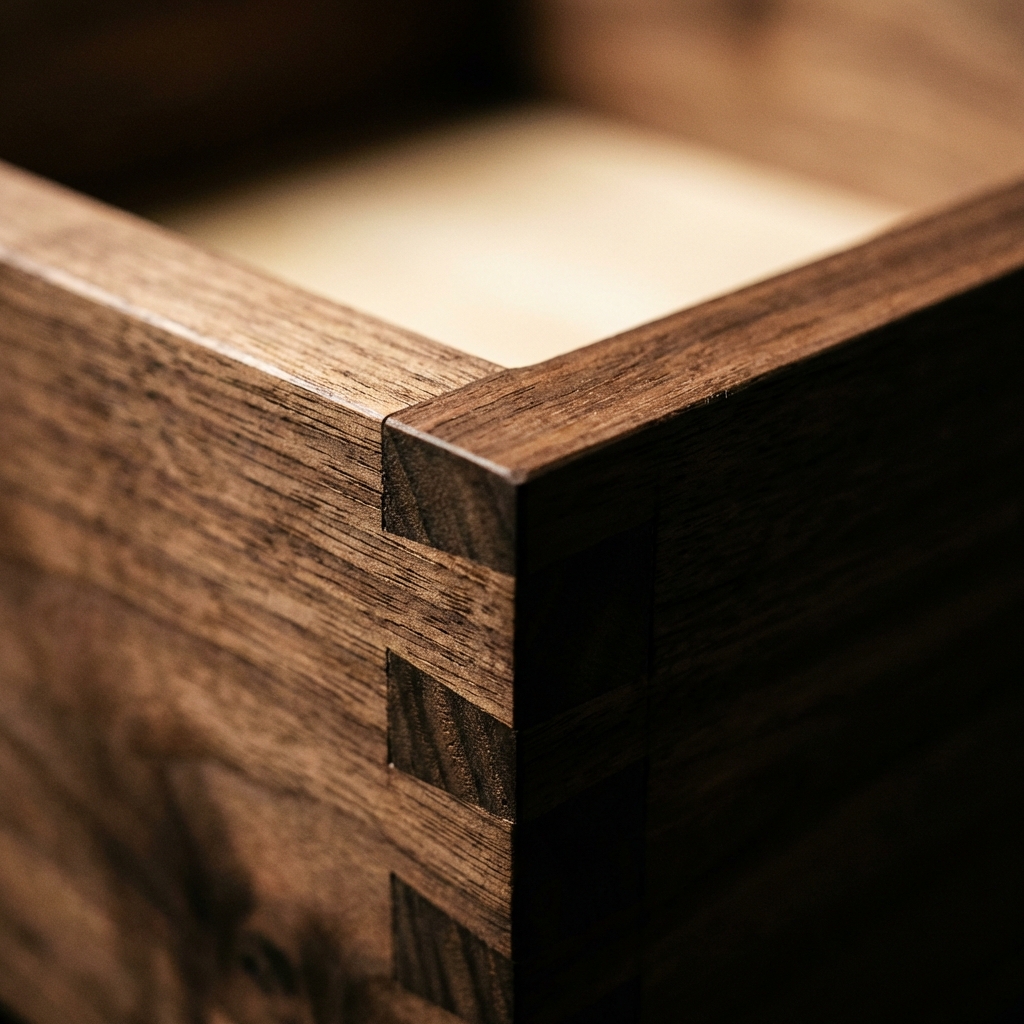
At Carpceter, we don't build temples, but we apply these principles to dining tables. We use sliding dovetails for breadboard ends to allow the tabletop to expand without warping. We use wedged through-tenons for chair legs, ensuring they never wobble, even after 50 years of family dinners.
It costs more. It takes four times as long. But when you run your hand over a joint so tight the line disappears, you understand why.
