
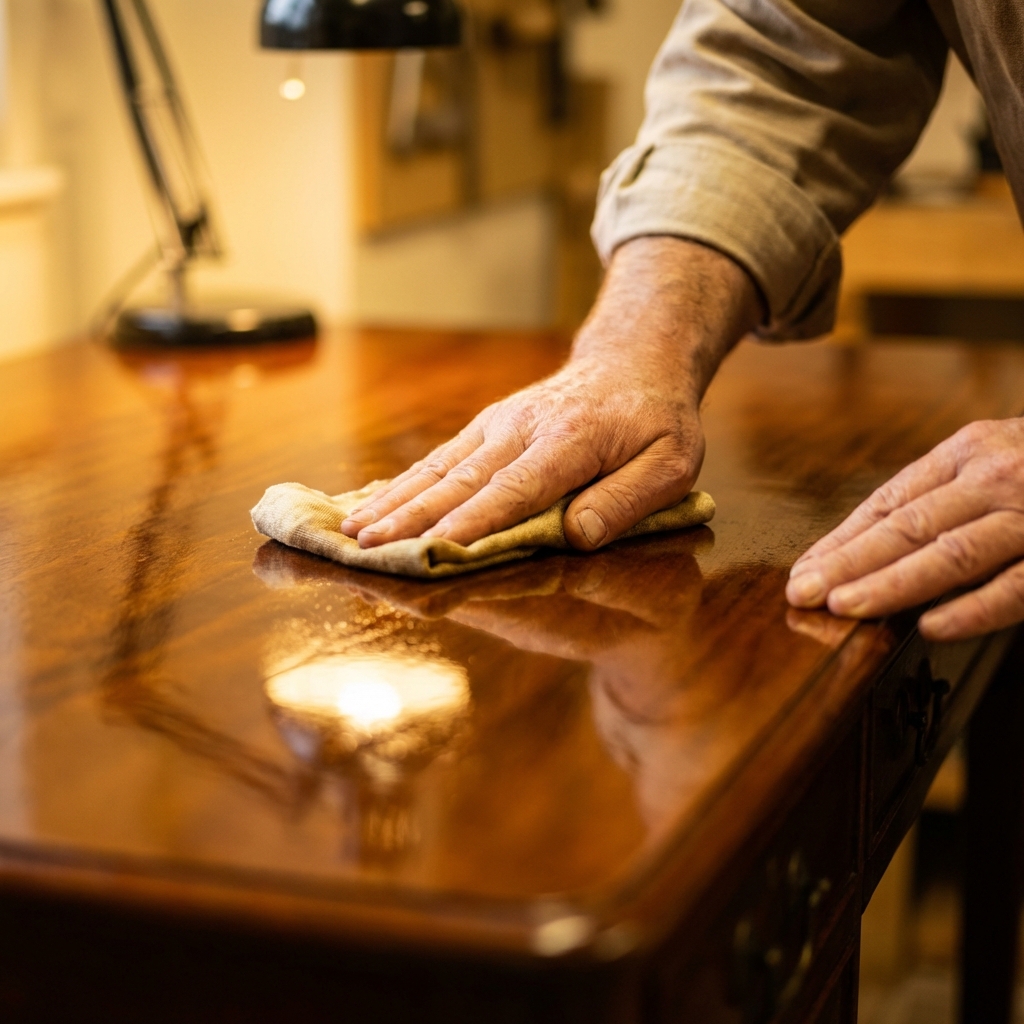
The number one phone call I get at the shop is: "I sanded down my grandmother's mahogany table and now it looks patchy. Can you fix it?" The answer is usually: "Maybe, but it will cost double what it would have if you called me first."
Restoration vs. Refinishing
These are not synonyms. Restoration means keeping as much of the original finish as possible. It involves cleaning, amalgamating the existing shellac, and waxing. It preserves the "patina"—the scratches and oxidation that prove the table's age.
Refinishing is the nuclear option. It means stripping the wood down to raw lumber and starting over. This should only be done if the original finish is chemically breaking down (alligatoring) or if there is severe water damage.
"If you hadn't stripped this highboy, it would be worth $50,000. Now it's worth $5,000." Never strip a piece made before 1850 without consulting an appraiser.
The Chemical Stripper Myth
YouTube DIY-ers love Citristrip. It smells like oranges and is safe for indoors. It is also terrible for fine antiques. It leaves a gummy residue in the pores of oak and walnut that is impossible to neutralize. When you try to apply a new oil finish, it won't cure.
If you must strip, use methyl hydrate and steel wool to dissolve the old shellac/varnish gently. It requires a respirator mask, but it respects the wood.
The Polyurethane Sin
Never, ever put Polyurethane on an antique. It looks like plastic because it IS plastic. It sits on top of the wood like a condom. When it scratches, it turns white and creates a haze.
Use Tung Oil or Danish Oil. These penetrate the wood fibers and harden from within. They create a soft, satin glow that feels warm to the touch. And best of all? If you scratch it 10 years later, you just wipe on a little more oil and the scratch disappears.
Conclusion
An antique table has scars. Those scars are stories—Christmas dinners, homework sessions, spilled wine. Respect the scars. Clean the dirt, feed the wood, but don't try to make a 100-year-old table look like it came from IKEA.
