If you buy a mass-produced table today, it is likely sprayed with Polyurethane lacquer. It looks shiny. It feels like plastic. And when you scratch it—and you will scratch it—you cannot fix it.
Polyurethane is a plastic sheet that sits on top of wood. It suffocates the grain. It creates a barrier between you and the organic material you paid for. At Carpceter, we refuse to use it.
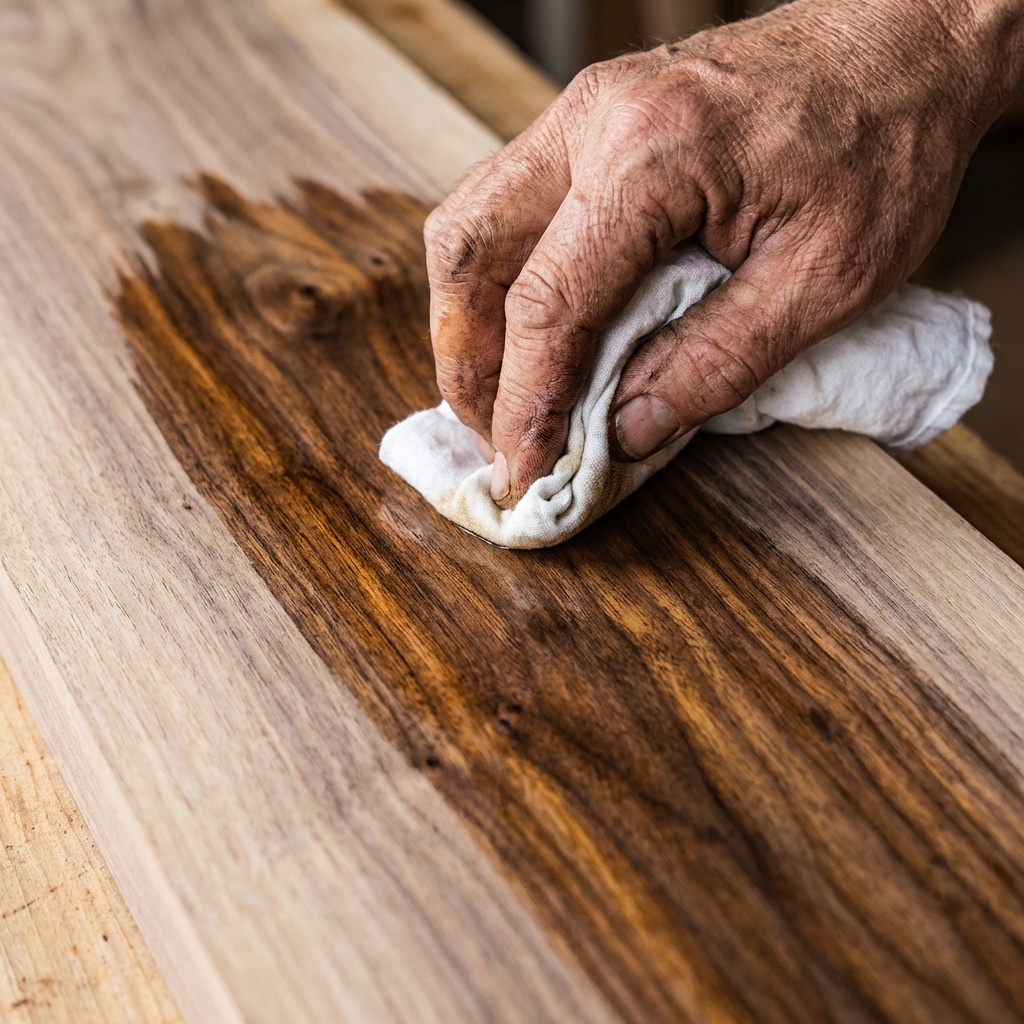
Instead, we use hardwax oils (specifically derived from Tung oil and Linseed oil). These finish penetrate into the wood fibers, hardening them from the inside out. They leave the surface looking matte and feeling warm to the touch. But unlike plastic finishes, they require a relationship. You must care for them.
Why Oil is Superior
The beauty of an oil finish is repairability.
Imagine you scratch your lacquer dining table with a fork. That white scratch is in the plastic coating. To fix it, you must sand the entire table down to raw wood and re-spray it in a dust-free booth. It is a nightmare.
Now imagine you scratch your Carpceter oil-finished table. You simply take a small piece of sandpaper, sand that specific spot, add a drop of oil on a rag, and wipe it in. In 20 minutes, the repair is invisible. The new oil bonds to the old oil seamlessly. It is a living finish.
Daily Care Checklist
Living with oil is simple if you follow three rules:
- No Chemical Cleaners: Never use Windex, Pledge, or Clorox. These harsh solvents strip the oil. Use a damp soft cloth for daily wiping. If you need soap, use a pH-neutral dish soap diluted in water.
- Wipe Spills Immediately: Oil is water-resistant, not waterproof. If red wine sits on the table for 4 hours, it might leave a mark. Wipe it up when it happens.
- Watch the Heat: Hot pans can burn the oil. Always use a trivet or coaster.
The Yearly Ritual: Refreshing the Surface
Once a year (or whenever the wood starts to look dry), you should give your furniture a "spa day." It is a satisfying 20-minute process.
What You Need:
- Maintenance Oil (we recommend Rubio Monocoat Refresh)
- A clean, lint-free white cotton rag
- A Scotch-Brite pad (only if there are stains)
The Process:
1. Clean: Wipe the surface with a damp cloth and let it dry completely.
2. Apply: Pour a very small amount of oil onto the wood. A little goes a long
way.
3. Buff: Spread the oil with the cloth, rubbing it into the grain. Ensure every
inch is covered.
4. Dry: wait 15 minutes, then take a fresh dry cloth and wipe off ALL
excess oil. The surface should feel dry to the touch, not sticky. If it feels sticky, you left too
much oil.
That's it. Your table will look brand new again. The grain will pop, the color will deepen, and the protection is renewed.
Aging Gracefully
The Japanese concept of Wabi-Sabi celebrates the beauty of imperfection and age. An oil-finished table is meant to age. It will darken with UV exposure. It will accumulate small dents that tell the story of family dinners and homework sessions. This patina is what makes an heirloom. A flawless plastic table has no soul. A well-loved oiled table has history.
Need Maintenance Supplies?
We stock the exact oil blends used in our workshop. Order a maintenance kit and keep your furniture glowing.
Order Maintenance Kit