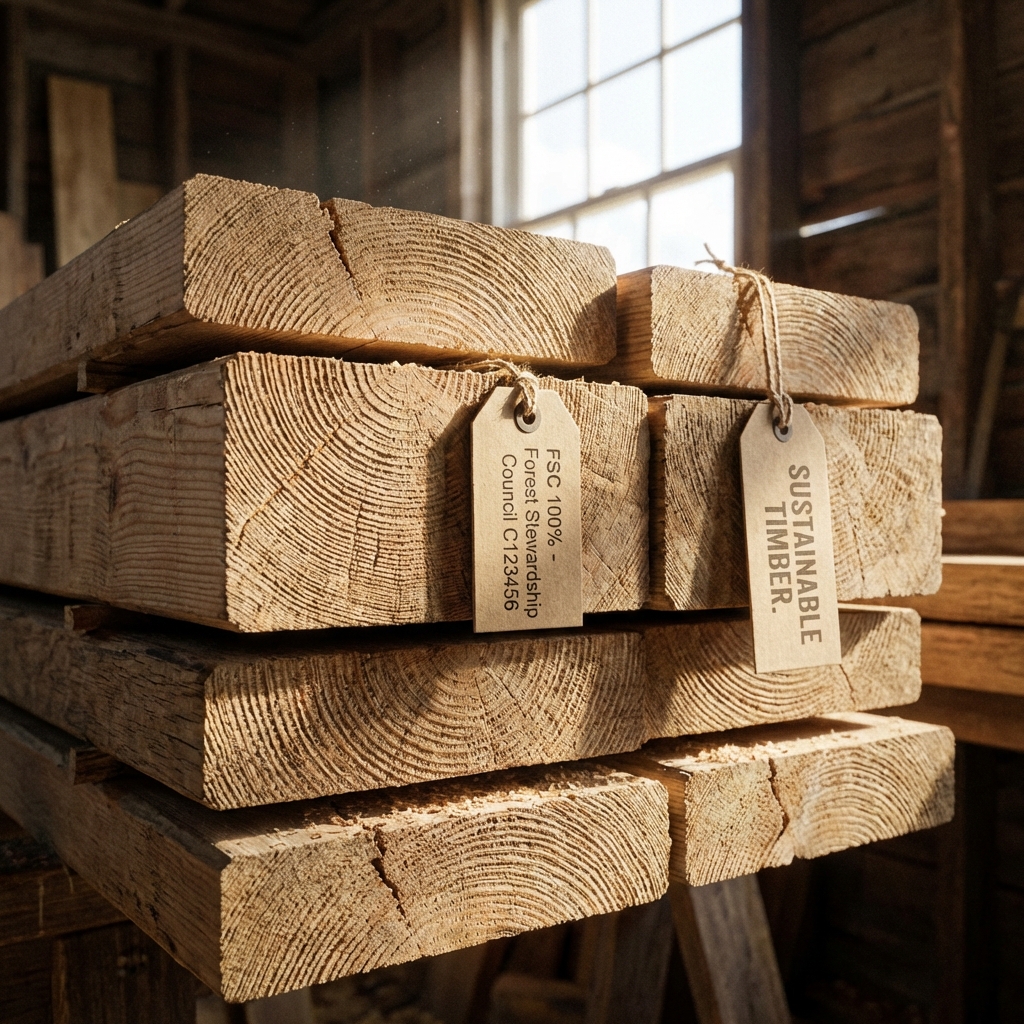
We love wood. It is warm, tactile, and beautiful. But we cannot ignore that our craft involves cutting down living organisms that provide oxygen and habitat. The ethics of woodworking are complex, but the solution isn't to stop using wood—it is to use it correctly.
There is a misconception that plastic or metal furniture is more "eco-friendly" because it saves trees. This is false. Wood is our only naturally renewable building material. It captures carbon from the atmosphere and locks it away for centuries. Plastic is fossil fuel made solid. Steel requires massive smelting energy. Wood grows itself, powered by sunlight.
However, not all wood is equal. There is a vast difference between an Oak tree selectively harvested from a managed forest in Pennsylvania and a Teak tree illegal poached from a rainforest in Myanmar. As a consumer, how do you tell the difference?
The Trap of "Exotic" Woods
The first rule of sustainable furniture buying: avoid the tropics unless you have ironclad proof of origin. Species like Rosewood, Bubinga, Ebony, and Teak often come from fragile ecosystems in South America, Africa, and Southeast Asia where illegal logging is rampant.
Illegal loggers build roads into virgin rainforests, creating access for further destruction. When you buy a cheap "Mahogany" table, you may be unwittingly funding the destruction of the Amazon. At Carpceter, we almost exclusively use North American domestic hardwoods: White Oak, Walnut, Cherry, Ash, and Maple. We have some of the best managed forests in the world right here in our backyard.
Understanding Certifications: FSC and PEFC
You will often see the logo of the Forest Stewardship Council (FSC). This is the gold standard. FSC certification tracks the chain of custody from the forest floor to the furniture showroom.
FSC guidelines ensure:
- Trees are harvested selectively (no clear-cutting).
- Biodiversity is maintained (dead trees left for wildlife).
- Indigenous peoples' rights are respected.
- Workers are paid fair wages.
When we buy lumber, we look for the FSC stamp on the end grain. It costs about 15-20% more than uncertified lumber. We pay it gladly. That premium is the cost of ensuring we will still have forests in 100 years.
The "Urban Lumber" Movement
Sustainability isn't just about forests; it's about waste. Every year, thousands of trees in cities are cut down due to storm damage, disease, or construction. Historically, these city trees were chipped for mulch or sent to landfills.
We are part of a growing network of "Urban Sawyer" programs. When a 100-year-old Elm falls in a Portland park, we get the call. We mill it into slabs. These trees often have unique character—nails from old flyers, interesting grain from growing around obstacles—that tells a story of the city. We call it "Rescued Wood." Using a tree that was already coming down is the purest form of sustainable sourcing.
Longevity is the Ultimate Sustainability
The most wasteful piece of furniture is the one you throw away.
If you buy a cheap particle-board desk that breaks in 3 years, you have wasted the wood, the glue, the shipping fuel, and the landfill space. If you commission a solid White Oak desk that lasts 100 years, the environmental cost per year is negligible. By the time that desk needs to be replaced, the forest has already regrown the tree two times over.
We build furniture to be repaired, not replaced. We use joinery that can be disassembled. We use finishes that can be refreshed. This is the "Slow Furniture" movement. Buy once, buy well, and keep it forever.
Our Sustainability Pledge
For every piece of furniture we sell, we plant 5 native hardwood saplings in the Cascade foothills through our partnership with Tree for the Future.
Read Our Mission