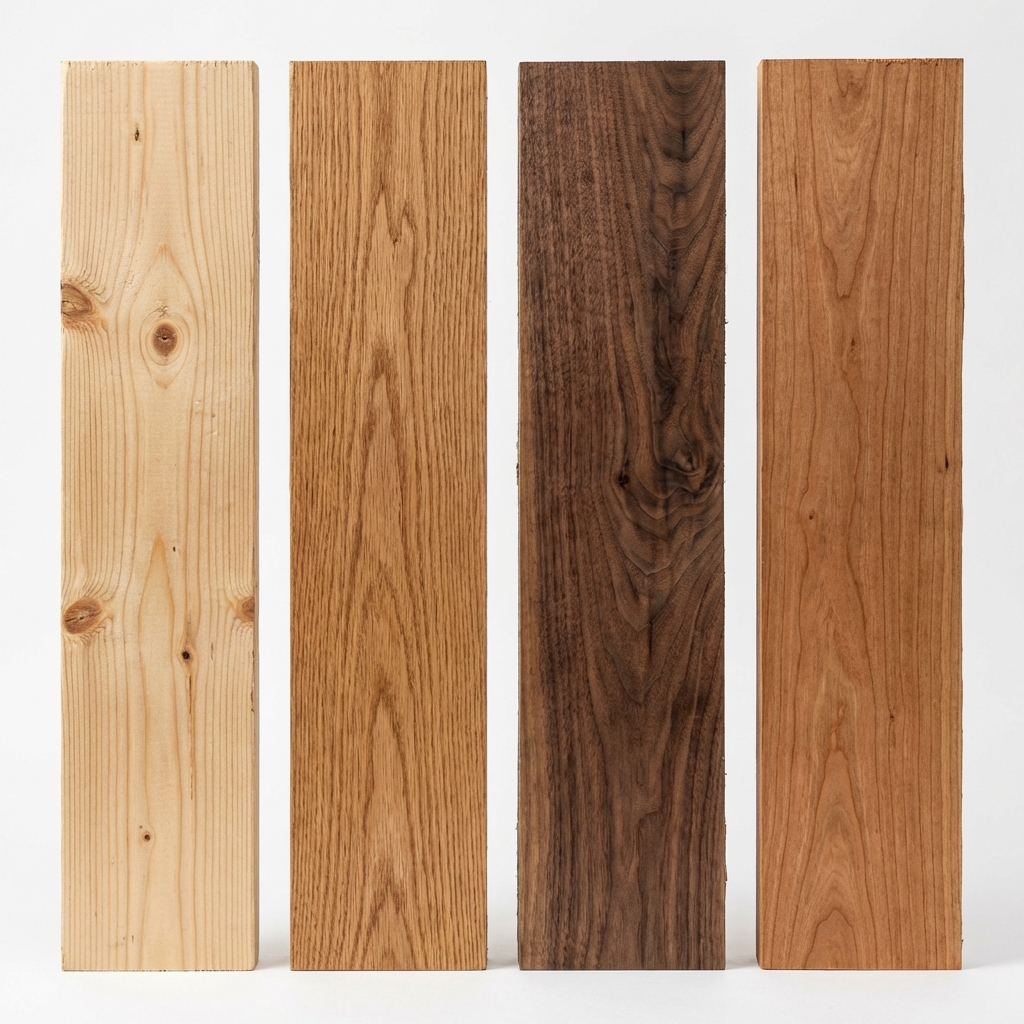
The names are misleading. Balsa wood is technically a hardwood, yet it is so soft you can dent it with your fingernail. Yew is a softwood, yet it is tougher than many oaks. To choose the right material for your heirlooms, you must look past the name.
In my 25 years at the bench, I have seen beautiful designs fail because they were executed in the wrong species. I have seen dining tables made of Pine that looked ruinous after one Thanksgiving dinner, and I have seen drawer sides made of Oak that wore out the runners because they were too heavy.
Understanding the biological difference between these two categories is the first step to woodworking literacy.
The Botanical Distinction: Seeds, Not Density
The terms "hardwood" and "softwood" do not refer to the physical density of the fiber. They refer to the reproduction method of the tree.
Softwoods (Gymnosperms) are conifers. They have needles and cones. Think Pine, Fir, Spruce, and Cedar. They are "evergreen"—they keep their needles year-round. Biologically, they are simpler. Their cellular structure is open and porous, designed to move water quickly up a straight trunk. This makes them grow fast, which makes them cheap.
Hardwoods (Angiosperms) are flowering plants. They have broad leaves that fall off in autumn (deciduous). Think Oak, Walnut, Maple, and Cherry. Their cellular structure is complex, dense, and slow-growing. A Walnut tree might take 60 years to reach the size a Pine tree reaches in 20.
Why We Need Both
At Carpceter, we use both, but for very different purposes.
1. Strength and Wear Resistance
For any surface that will be touched, walked on, or eaten off, biological Hardwood is usually the superior choice. The tighter grain structure resists denting. If you drop a set of keys on a Pine table, you get a crater. If you drop them on a White Oak table, you get a noise.
2. Stability and Movement
Softwoods often move (expand and contract) more drastically with humidity changes. This makes them poor choices for wide tabletop panels or precision joinery that needs to stay tight for a century. However, softwoods are incredibly stable for structural framing—that is why your house's skeleton is made of Douglas Fir.
3. Workability
Softwoods cut like butter. You can shape them effortlessly. Hardwoods fight back. Working with hard Maple requires incredibly sharp tools and patience, or it will burn. But that resistance allows for crisper details. You can cut a finer dovetail in Walnut than you ever could in Pine, where the fibers would simply crush.
The Carpceter Species List
We act as curators for our clients. We generally refuse to build fine furniture out of construction-grade softwoods. Here are our primary choices:
American Black Walnut (Hardwood)
The aristocrat of American timber. Dark, chocolatey, and workable. Ideally suited for statement pieces like dining tables and credenzas.
White Oak (Hardwood)
The workhorse. Extremely hard, rot-resistant, and distinctively grained. We use Quartersawn White Oak for its stability and "ray fleck" figure.
Eastern Hard Maple (Hardwood)
Pale, creamy, and incredibly dense. It finishes to a glass-smooth surface. Perfect for drawer interiors and modern, minimalist designs.
Douglas Fir (Softwood)
The only softwood we regularly use, specifically old-growth reclaimed Fir. It has tight, straight grain that glows orange with age. We use it for architectural elements and occasionally rustic table bases.
The Janka Scale
If you want to get scientific, check the Janka Hardness Scale, which measures the force required to embed a steel ball into the wood.
- Hickory: 1,820 lbf (Hardest domestic)
- Hard Maple: 1,450 lbf
- White Oak: 1,360 lbf
- Walnut: 1,010 lbf
- Cherry: 995 lbf
- Eastern White Pine: 380 lbf (Very soft)
We recommend woods with a Janka rating above 900 for tabletops. Anything less is liable to mar too easily for daily use.
Touch the Difference
We send free samples of our Walnut, Oak, and Maple finishes with every serious commission inquiry. Feel the density weight in your hand before you decide.
Request a Sample Kit